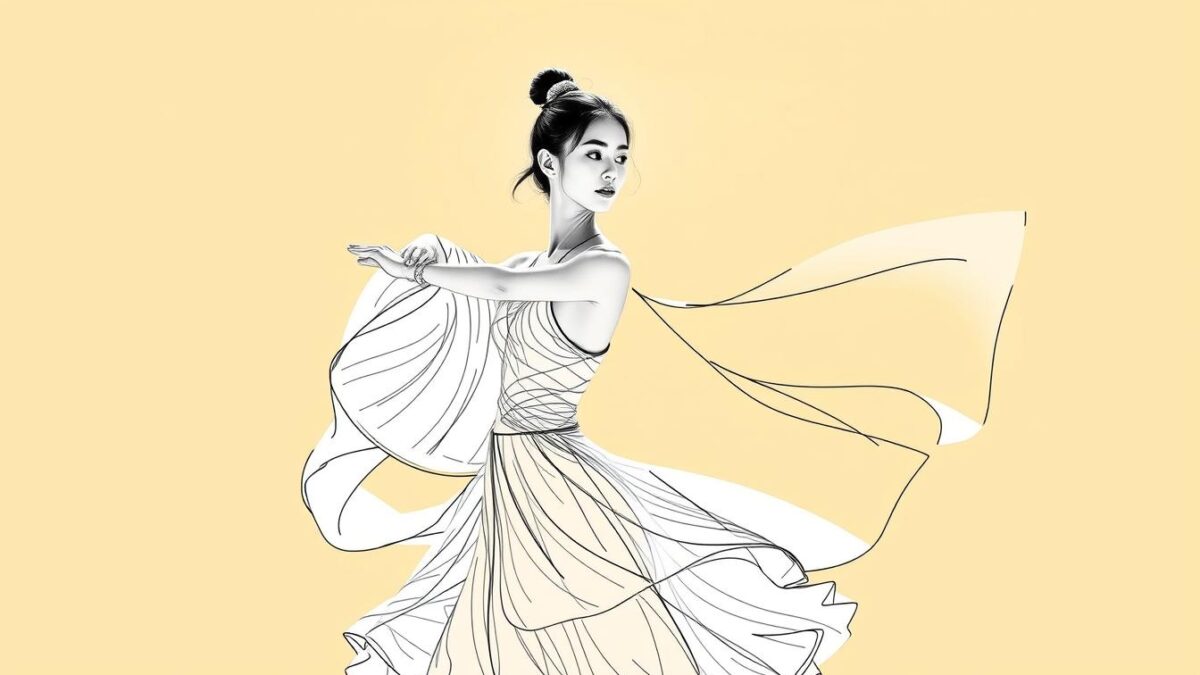
A young dancer claimed third place in Japan’s competitive junior contemporary division at just fourteen. She represented TAJIMA KAZUMI BALLET STUDIO, marking an early milestone in a demanding artistic path.
Her performance revealed both technical precision and emotional depth. These qualities often separate studio dancers from those who capture broader attention.
This dancer’s journey shows how foundation, discipline, and individual expression combine. We trace her path from early training through competitive achievements.
Her story reflects the rigorous pathways for young artists in Japan. It highlights how tradition and personal voice interact within collective dance forms.
The context of seasonal awareness and cultural heritage informs her movement vocabulary. This background shapes the unique approach she brings to contemporary dance.
Early Inspirations and Cultural Roots in Japan
The foundation for her artistic expression was laid during childhood training that balanced tradition with innovation. Each day brought new challenges and discoveries at the studio.
Childhood and Early Training
Tsumugi Hayakawa began formal training at TAJIMA KAZUMI BALLET STUDIO. The daily routine included barre work, center exercises, and improvisation sessions.
This environment encouraged students to find personal expression within structured forms. Younger dancers learned from advanced students and instructors who maintained high standards.
The studio culture fostered both support and discipline. Students developed technical precision through repetitive practice while exploring contemporary movement.
Cultural Foundations of Japanese Dance
Japanese dance education emphasizes the relationship between body and space. It draws from cultural practices that value subtlety and restraint.
The training environment honored both individual artistry and collective discipline. Dancers learned to respect tradition while pursuing innovation.
This approach shaped how young artists understand their craft. Precision, respect for lineage, and spatial awareness became fundamental principles.
Tsumugi Hayakawa: A Journey Through Dance and Legacy
A signature style developed through the integration of ballet fundamentals with modern improvisation. This dancer’s path shows how technical foundation fuels artistic innovation.
Signature Techniques and Style Evolution
Her movement vocabulary honors structure while embracing spontaneity. She uses breath and weight shifts to create organic transitions.
Classical ballet foundations merge with contemporary fluidity. Judges and audiences recognize this distinctive approach in her performances.
The style evolution reflects engagement with Japanese aesthetics and global trends. Work feels rooted yet exploratory.
Milestones in Her Dance Career
At fourteen, Tsumugi Hayakawa placed third in Japan’s competitive junior contemporary division. This achievement validated her technical skill and artistic maturity.
The competition marked her as a dancer capable of complex choreography. She maintained emotional clarity and stage presence under pressure.
Career milestones include performances that expanded her repertoire. Each challenge deepened her understanding of movement communication.
Her journey demonstrates how young artists build legacies through incremental progress. Every performance offers lessons that shape future choices.
The Influence of Daily Rhythms and Seasonal Change on Performance
Beyond the studio walls, the flow of the day and the turn of the seasons become silent partners in a dancer’s creative process. This awareness moves beyond simple scheduling into the texture of the performance itself.
How the Day Shapes Movement and Emotion
Morning training often focuses on technical precision. The body is fresh, the mind clear for mastering complex sequences.
As the day progresses, energy shifts. Afternoon or evening sessions allow for more expressive, intuitive exploration. Dancers learn to listen to their bodies, adjusting intensity based on their readiness at different times.
This rhythm teaches artists to harness the unique qualities of each part of the day. It transforms discipline into a responsive practice.
Seasonal Elements in Traditional and Modern Dance
Seasonal change holds deep meaning in Japanese culture. Dancers incorporate this symbolism into their work, reflecting cycles of growth and renewal.
Traditional forms use costume and gesture to reference specific seasons. Contemporary artists like Tsumugi Hayakawa reinterpret these ideas.
They might use movement quality to evoke spring’s lightness or winter’s stillness. This integration honors heritage while finding fresh, personal relevance.
Sensitivity to these rhythms distinguishes a technically skilled performer from one who connects with larger, more universal patterns.
Insights from Dance Competitions and Peer Recognition
Peer recognition at a national level validates a dancer’s technical skill while exposing them to a wider artistic community. These events are intense crucibles where training meets pressure.
They offer a clear measure of progress against a talented peer group. The experience builds resilience that lasts long after the final curtain.
Accolades and Competitive Achievements
At fourteen, Tsumugi Hayakawa secured third place in a national junior contemporary division. This result placed her among Japan’s most promising emerging dancers.
The contest evaluated both classical precision and contemporary expression. Success required more than flawless technique. It demanded artistic courage and emotional clarity.
Such an achievement highlights the quality of mentorship at studios like TAJIMA KAZUMI BALLET STUDIO. Instructors prepare students for the psychological demands of the stage.
Beyond the trophy, competition fosters invaluable networks. Dancers observe different approaches and learn from each other’s strengths.
These milestones prompt deep reflection. They help artists identify areas for growth and refine their long-term goals.
Final Reflections on Artistry and Cultural Impact
What remains after the applause fades is the lasting impression of an artist’s unique voice on the cultural landscape. Tsumugi Hayakawa’s artistry reflects a generation of Japanese dancers navigating this space.
They honor deep tradition while embracing global innovation. Their work sparks conversations about the body’s power to communicate complex ideas.
This journey illustrates the pathways available to young artists in Japan. Rigorous training coexists with creative exploration. Mentorship and discipline are essential.
The legacy of a dancer like Tsumugi Hayakawa extends beyond the stage. It influences pedagogy and broadens the dialogue about dance’s role in society. Her story shows how individual voices emerge within collective practices that value both excellence and humanity.